How Big Things Get Done: Lessons for Megaproject Success
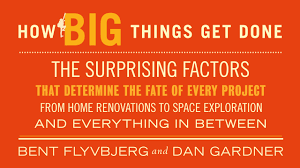
I recently read How Big Things Get Done by Prof. Bent Flyvbjerg & Dan Gardner — a powerful book for anyone in project management. Drawing from thousands of projects, it shows a clear pattern: most megaprojects go over time, over budget, and under-deliver — unless they are planned with discipline, clarity, and strategic foresight.
(Examples: California High-Speed Rail, The Great Belt Project, Denmark)
Key principles that stood out:
🔹 Plan slow, act fast — invest upfront in clarity and risk.
🔹 Think right-to-left — start with the end and work backwards.
🔹 Anticipate uncertainty — don’t be surprised by the unknown.
🔹 Reference class forecasting
India’s goal of becoming a developed nation by 2047 depends on today’s capital programmes — Gati Shakti, NIP, Sagarmala, rail modernization, smart cities, and energy transition. These are not just projects; they are nation-building programmes.
Yet, we face recurring challenges:
-Land & regulatory delays
-Poor DPR quality leading to scope creep (Think fast-act slow)
-Optimism bias in cost and time
-Multi-stakeholder coordination
-Skill gaps in planning and execution
To reach India@2047, we must move beyond speed and build with precision, realism, and discipline. World-class project management is no longer support—it is a strategic capability.
We should have a robust public database on these projects to share the good practices, lessons learned, time & cost overruns, benefits realized to ensure our natural resources are utilized wisely.

Ready to lead better
The principles that work in the field work everywhere. Let us show you how to apply them to your projects.

More from the field
Practical lessons from three decades of project work